“Near-miss effect” in slots: how it works and how to recognise it
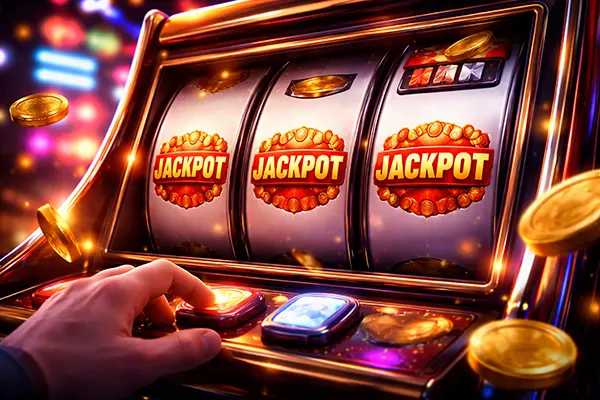
A near-miss is a losing spin that looks and feels uncomfortably close to a win. Think of two jackpot symbols landing neatly on the payline and the third stopping “just above”, or a bonus tease where the last scatter lands one position away. Nothing is actually “almost” happening in terms of probability, but your brain reads the outcome as progress. That gap between what the result is (a loss) and what it seems to suggest (nearly a win) is the near-miss effect, and it can be a powerful driver of longer sessions.
What the near-miss effect is (and what it is not)
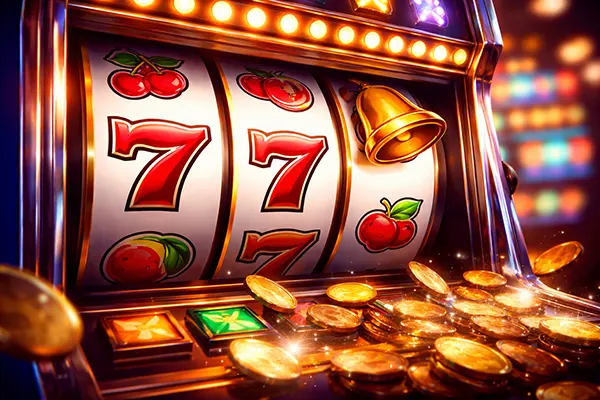
In plain terms, near-misses are losses styled to resemble “close calls”. They sit in a psychological grey zone: they do not pay anything out, but they borrow some of the emotional punch of a win. Slot design often reinforces that impression with sound cues, animations, “teasing” symbol stops, or a momentary pause before the final reel settles.
It’s important to separate the feeling from the maths. Slot outcomes are generated by a random number generator (RNG) and the result of each spin is independent of the previous one. A near-miss does not mean the next spin is more likely to hit, and it does not mean the machine is “warming up”. It is a loss packaged to feel meaningful.
Near-misses can also be confused with other effects, especially “losses disguised as wins” (LDWs), where a celebratory animation plays even though the payout is smaller than the stake. Both can blur your perception of what’s actually happening to your balance, but they work differently: a near-miss is a loss that looks close to a win; an LDW is a net loss that looks like a win.
What research says about why near-misses motivate play
Behavioural studies have long suggested that near-misses can increase the urge to continue, even though the outcome is objectively negative. One influential line of research shows that near-miss outcomes can recruit some of the same reward-related brain circuits as wins, especially when players feel a sense of personal control over the action (for example, choosing when to stop a reel).
At the same time, the academic picture is not “settled in one sentence”. Reviews of the experimental literature note inconsistencies: near-misses do not reliably increase gambling behaviour in every design, every population, or every study. That matters because it pushes the conversation away from hype and towards specifics: which designs, in which contexts, affect which players.
The practical takeaway for a player is still clear. Even if you personally don’t feel “pulled in” by near-misses, the feature exists because it often works as a motivational cue. Treat it like any other persuasive design element: notice it, label it, and don’t let it become a reason to extend a session.
How modern slots create the “almost won” feeling
Near-misses are not only about where symbols land. They are about how the game communicates that landing. Timing, sound, reel-stop behaviour, and visual emphasis can all be tuned so that certain losses feel close, dramatic, or significant. This is why two equally random games can feel very different to play.
Many slots use features that repeatedly “tease” a bonus: two scatters appear early and the final reel slows down, as if the free spins are about to trigger. When that last scatter misses, the disappointment is sharp—yet it often comes with the feeling that you were inches away. That emotional swing can make players chase another spin to “finish the job” that never actually started.
In Great Britain, regulators have tightened requirements around remote game design to reduce intensity and improve transparency. The UK Gambling Commission’s Remote gambling and software technical standards (RTS) have been updated over time, and revised design requirements came into force on 17 January 2025. These rules don’t eliminate near-misses as a concept, but they do set boundaries around misleading presentation and game changes, which is relevant when you’re assessing how “pushy” a slot feels in 2026.
Reel mapping, virtual reels, and why “close” can be engineered
On many digital slots, what you see as a “reel” is a display layer. Underneath it, the game may use virtual reel strips (a longer list of symbol positions) and then map those positions onto the visible reel. This is standard in modern slot development and it helps explain why some outcomes feel oddly frequent, including certain near-miss patterns.
Here’s the key point: a near-miss is not evidence that the game was numerically close to paying. The RNG selects an outcome; the presentation then shows that outcome in a way that can make it feel near. If a design repeatedly places a high-value symbol just above or below the payline, your brain reads “I nearly had it”, even though the probability mechanics were never “one step away”.
This is also why “stopping the reel” isn’t a skill. Even when a game lets you tap to stop the animation, you’re usually stopping the display, not changing the RNG-selected result. If you notice that your finger starts to feel like a strategy, that’s a sign to step back: perceived control can magnify the motivational pull of near-misses.
How to recognise near-misses and keep control during play
The most reliable way to cut through near-miss psychology is to anchor yourself in what is measurable: stake size, net outcome, and time spent. If a spin did not increase your balance, it was not a win—no matter how dramatic the sound was or how close the symbols looked.
Watch for repeated “tease scripts”. If you keep seeing the same pattern—two bonus symbols early, a slowed final reel, and a miss by one position—you’re likely looking at a deliberate tension loop. The game is not “getting closer”; it is repeating a design beat that encourages one more spin.
Also pay attention to your internal cues. Near-misses often trigger a specific thought: “I’m due” or “it has to land soon”. That is the moment to treat the spin as entertainment only, not as a problem to solve. Set a pre-decided session limit (time and money), and make any extra spin a conscious choice, not a reflex.
A practical checklist you can use in the moment
First, label what happened. Say it plainly to yourself: “That was a near-miss, not a win.” This tiny act breaks the illusion of progress and reduces the urge to “complete” the pattern.
Second, check the ledger: what was the stake, what was the return, and what is the net change? This is especially important if the game uses loud celebration for small returns. If the balance is going down, the feedback is decoration, not information.
Third, use friction on purpose. Turn off optional sounds if they amplify tension, take a short pause after any near-miss run, and avoid rapid re-staking. If you play online, use operator tools like deposit limits, time-outs, or reality checks where available. In 2026, safer-by-design expectations are more visible across regulated markets, so using those controls is normal, not exceptional.